Quick quiz: What's the most widely produced grain in the world?
Wheat? Try again.
Rice? Not quite.
Any other guesses?
The answer is corn. It's a staple throughout Central and South America and especially in the United States, where people have been eating it in all sorts of forms for hundreds of years.
Back home in Israel, though, it feels as if we're so busy with wheat, legumes, and every superfood on the shelf that we've almost forgotten this wonderful grain, with its sunny yellow color and sweet flavor.
Why I Love Corn—and What Makes Vegan Polenta So Good
Beyond its sweetness and the sheer number of things you can make with it, I love corn for what it brings to the table nutritionally:
Dried corn is primarily carbohydrate, with 70 g (2.5 oz) per 100 g (3.5 oz), so it can serve as the starch in your meal.
It also supplies folate, other B vitamins, and important minerals like potassium, magnesium, and iron. Corn is naturally gluten-free, making it an option for people with celiac disease.
Really, is there anything better than hot corn?
One of my favorite corn products is cornmeal—the kind used to make polenta.
It keeps much longer than fresh corn and offers many of the same nutrients. Some prepared products also come with plenty of added sodium, so check the label.
Ground corn shows up in sweet and savory baked goods, Mexican tortillas and tacos, and sauce thickeners. And, of course, there's Italian polenta and Romanian mamaliga, a traditional cornmeal porridge.
For this recipe, I'm making vegan polenta with rich, delicious cashew cream instead of butter and dairy cream. You still get that creamy, indulgent texture without relying on dairy. Cashews do contain some saturated fat, but most of their fat is unsaturated.
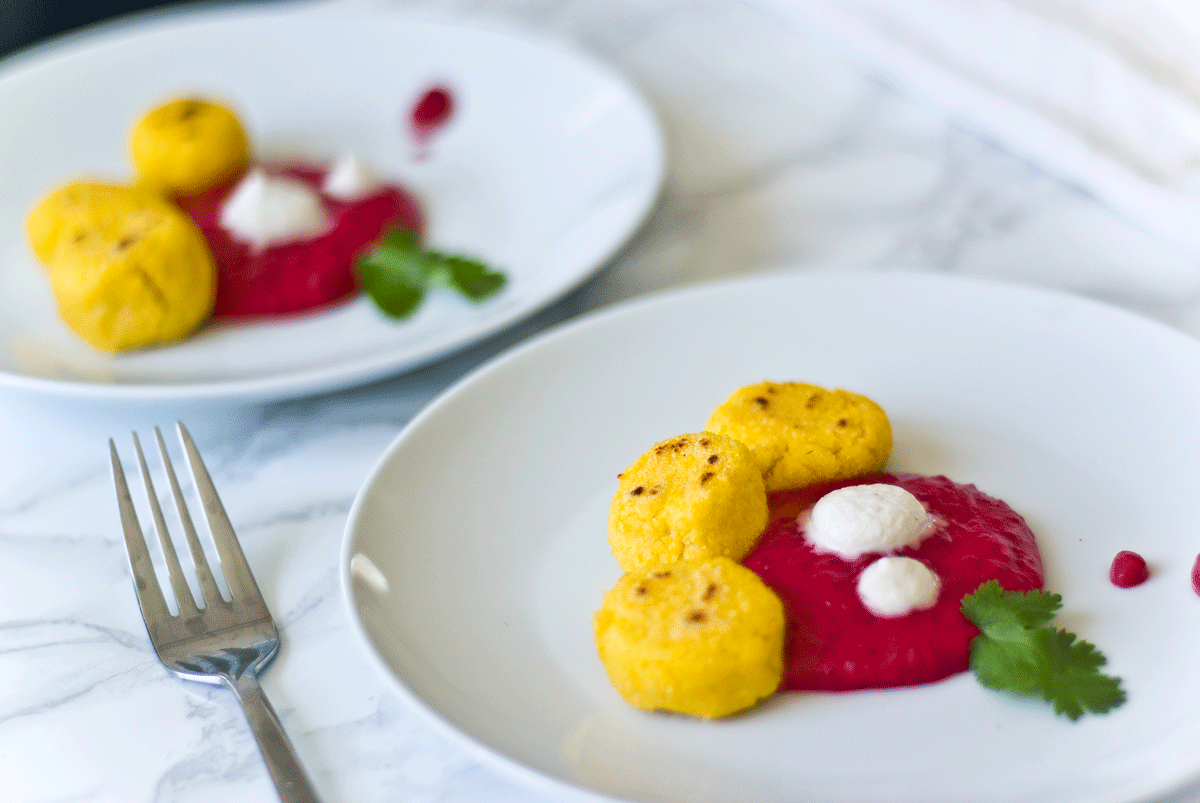
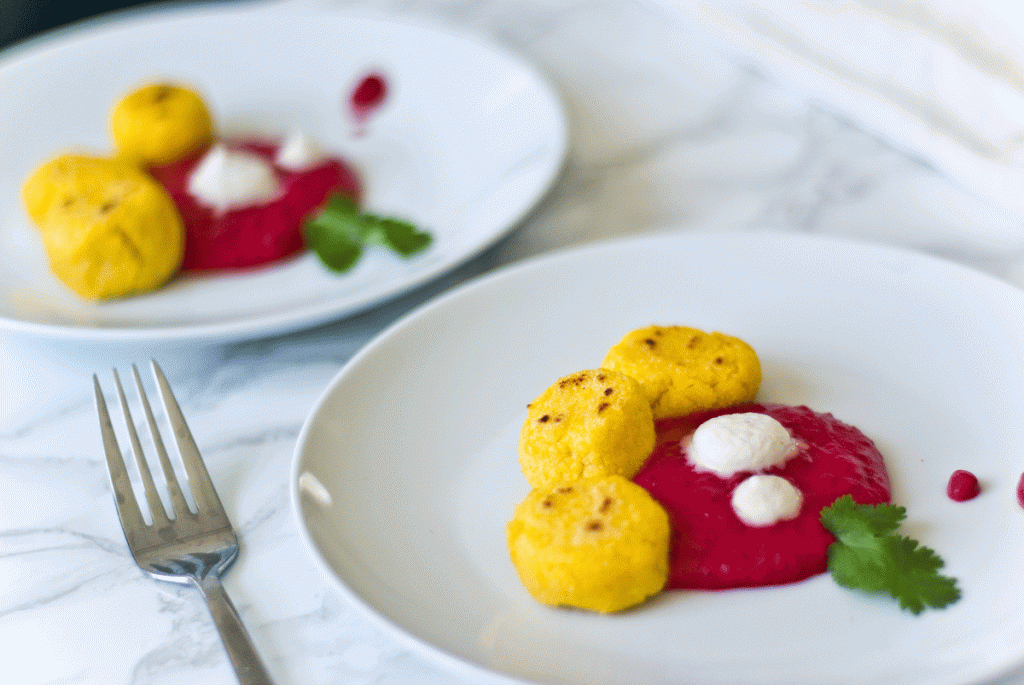
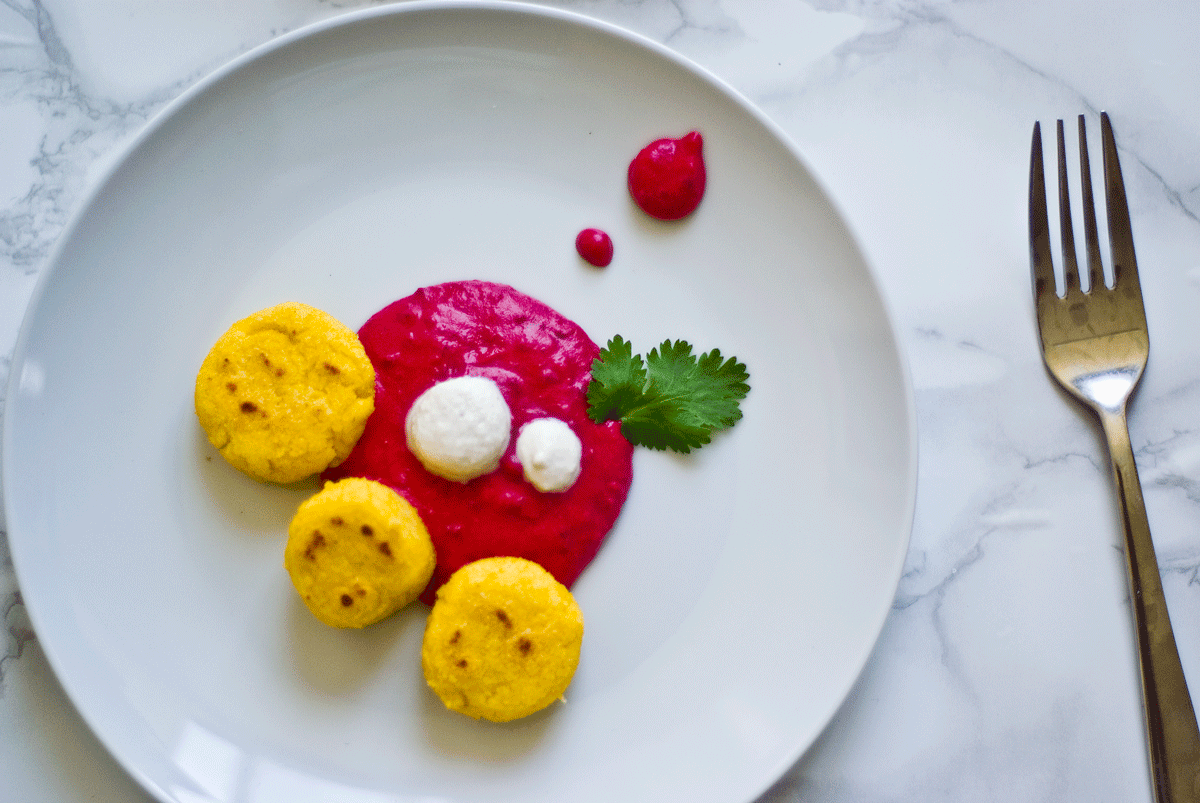
I like serving the polenta over a beet-and-bean version of masabacha (a Middle Eastern legume spread). It gives the plate a bright, festive look, plus a welcome boost of protein.
Come on. Isn't that gorgeous?
I served this as a holiday appetizer, and nobody noticed that the polenta didn't contain any dairy.
A few tips before you start:
- Stir the liquid constantly as you slowly pour the cornmeal into the pot. Take your time. The grains need a chance to cook and absorb the liquid.
- Take the pot off the heat while the mixture is still a little loose. It will keep firming up after you remove it from the stove.
- Serve the polenta balls hot. They're just not the same once they've cooled down.
Nutrition per serving:
280 calories, 10 grams protein, 7 grams fat (including 1 gram saturated fat), 64 mg sodium, 6 mg dietary fiber, 9 mcg folate, 4 mg magnesium, 321 mg potassium.
How to Make It
Ingredients
- 200 g (7 oz) dried bobes beans (large white beans sold in Israel) soaked overnight in plenty of water
- 1 cup cornmeal
- 1/2 raw beet peeled and diced
- 4 garlic cloves crushed
- Juice of 1 lemon
- 2-3 tablespoons olive oil
- 2 cups soy milk unsweetened
- 3 tablespoons cashew cream see recipe below
Cashew Cream
- 1 tablespoon olive oil
- 1 garlic clove
- 1 cup raw cashews unsalted, soaked in plenty of water for at least 4 hours
Instructions
-
Make the beet-bean masabacha: Drain the soaked beans and transfer them to a deep pot.
-
Cover with water and cook over low heat for about 1 1/2 hours, until completely tender. You can speed up cooking by adding 1/2 teaspoon baking soda.
-
Remove from the heat and set aside about 1/2 cup of the cooking liquid.
-
Place the cooked beans, 1 cup cooking liquid, diced beet, half the crushed garlic, 2-3 tablespoons olive oil, and the juice of 1/2 lemon in a food processor. Process thoroughly until you have a smooth, pink spread.
-
Make the cashew cream:
-
Drain the soaked cashews and transfer to a food processor. Add 1/2 cup water, 1 garlic clove, the juice of 1/2 lemon, and a little olive oil. Process on high for several minutes, until smooth.
-
Make the polenta balls:
-
Heat 2 cups soy milk in a deep pot. Add 2-3 tablespoons cashew cream, the remaining half of the crushed garlic, and the juice of 1/2 lemon. Bring to a boil.
-
Slowly pour the cornmeal into the pot, stirring constantly with a wooden spoon, until the mixture becomes thick and sticky. Don't rush—it should take several minutes.
-
Remove from the heat and let cool until comfortable to handle.
-
Once cooled, the polenta will be dense and sticky. Break it up with your hands and shape into ping-pong-size balls. Place the polenta balls in a hot skillet and sear for a few minutes on each side, until browned. You can use a very small amount of olive oil.
-
For each serving, arrange 4 hot polenta balls over 1 tablespoon beet-and-bobes-bean masabacha and 1 teaspoon cashew cream.