The Story Behind the Recipe
In partnership with Harduf (an Israeli organic food brand)
1: A single pea weighs between 0.1 and 0.36 grams.
2: Peas are among the oldest crops humans domesticated in the Middle East. Their history goes back to the early days of agriculture, alongside staple crops such as wheat, rice, and corn.
3: Green peas are green because they're picked before they're fully mature. Mature peas tend to be more yellowish. Eating green peas became fashionable in the 1600s and 1700s—the French even described the craze as a “madness.” Yes, over peas.
4: Only 5 percent of the peas grown are sold fresh. The rest are frozen or canned.
5: A 100-calorie serving of fresh or frozen peas—about three-quarters of a cup—has about as much protein as an egg.
6: In the mid-19th century, Gregor Mendel's observations of pea plants led him to develop the principles of Mendelian inheritance, the foundation of modern genetics.
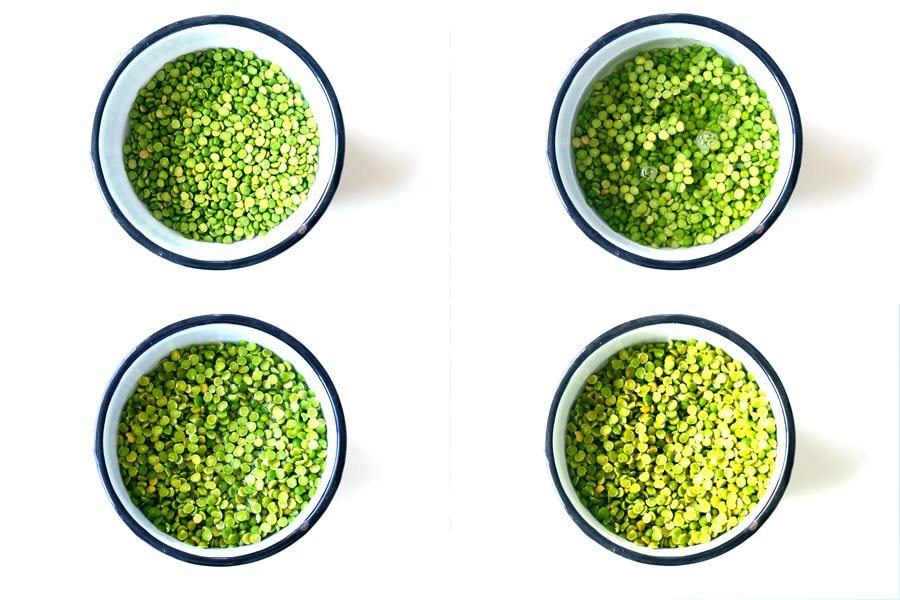
7: Fresh peas didn't catch on as a food until the 16th century. Before that, people ate them dried.
8: Dried peas dry naturally on the plant and are harvested in summer, while fresh peas are harvested in spring.
9: Peas have been the world's most widely frozen vegetable since the home freezer arrived in the 1920s.
10: The English fairy tale Jack and the Beanstalk has inspired no fewer than 5 film versions since its publication in 1807.
Dried vs. Frozen Peas: A Nutrition Comparison
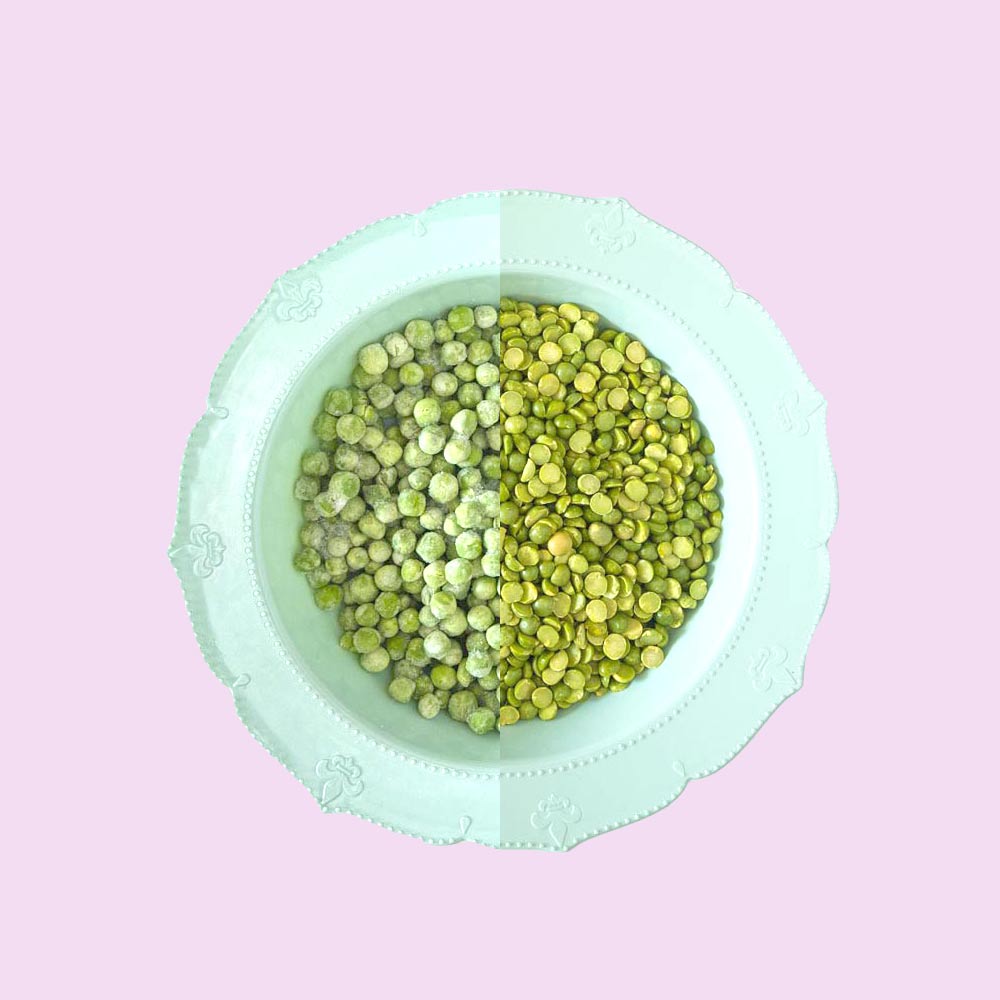
I compared 100 grams (3.5 oz) of dried peas with 100 grams (3.5 oz) of frozen peas, both from Harduf, which also partnered with me on this article.
| Dried peas | Frozen peas | |
| Calories | 302 | 73 |
| Protein | 22.9 | 6.9 |
| Carbohydrates | 41.2 | 10.5 |
| Fat | 1.4 | 1.5 |
| Dietary fiber | 16.6 | 5.1 |
The differences come down to water content and the way peas change in volume. Think of the difference between a dry food and its cooked version: the water changes how much nutrition you get in the same weight of food.
Health Benefits
Legumes, including peas, have an important place in our diets thanks to their starch, protein, and other nutrients.
Peas' health benefits come largely from the amounts and properties of their starch, protein, fiber, vitamins, minerals, and phytochemicals—naturally occurring plant compounds.
Fiber in the seed coat supports digestive function and gut health. It also makes the starch in peas less readily digested.
Pea starch contains a moderate proportion of amylose, a type of starch that also contributes to peas' low glycemic index and slower starch digestion.
The vitamins and minerals in peas may help prevent conditions related to nutrient deficiencies, particularly deficiencies in selenium or folate.
Peas also contain a range of phytochemicals once viewed mainly as antinutrients. These are natural or synthetic compounds that interfere with nutrient absorption; phytic acid and oxalic acid are examples.
They include polyphenols in the seed coat, which have antioxidant and potential anticancer activity, and galactose oligosaccharides—a type of sugar that may have beneficial prebiotic effects in the colon. For example, a 2017 study in mice found that green peas helped protect against colitis in the context of a high-fat diet. That's a finding in mice, not proof of the same effect in people.
Another study evaluated how calorie-restricted, legume-based diets affected the metabolic and inflammatory changes that accompany weight loss.
The result: eating about 4 servings of legumes, such as peas, per week reduced pro-inflammatory markers and significantly improved metabolic measures, including blood lipids and blood pressure, among study participants with overweight.
Sources:
https://www.ncbi.nlm.nih.gov/pubmed/22916813
https://www.ncbi.nlm.nih.gov/pubmed/28524086