Plain cooked tempeh provides about 195 calories, 19.9 g protein, 7.6 g carbohydrate, and 11.4 g fat per 100 g (3.5 oz). Treat these as reference values: brands vary because some use different soybeans, added grains, seeds, oil, or marinades.
Tempeh is one of the most useful whole-food proteins for vegan athletes. It delivers a meaningful protein dose, retains the soybean's fiber and fats, and has a firm texture that works in bowls, sandwiches, curries, and meal prep.
Tempeh calories per 100 g (3.5 oz): nutrition facts
| Nutrient | Cooked tempeh, per 100 g (3.5 oz) |
|---|---|
| Calories | 195 kcal |
| Protein | 19.9 g |
| Carbohydrate | 7.6 g |
| Fat | 11.4 g |
The values above use a USDA reference entry. Your package label is the best source for the exact block in your refrigerator. Weigh the edible portion before or after cooking and use a matching database entry.
Why tempeh works for muscle growth
Muscle hypertrophy requires progressive resistance training, adequate energy, and enough daily protein. Tempeh contributes approximately 20 g protein per 100 g (3.5 oz), so a 150 g (5.3 oz) serving from a typical plain product can provide around 30 g before sauces and sides.
- Complete soy protein: soy supplies all nine essential amino acids.
- Easy meal anchor: the firm block makes portions simple to measure.
- Energy plus protein: its natural fat raises calories compared with very lean tofu or an isolate.
- Iron and minerals: tempeh contributes useful micronutrients, although exact amounts vary.
Use the Protein Intake Calculator to set a daily target instead of judging a food by one serving.
What fermentation changes
Tempeh is made by fermenting cooked soybeans with a Rhizopus culture. The fungal mycelium binds the beans into a firm cake. Fermentation can reduce some phytate and break down parts of the protein and carbohydrate structure, but it does not turn cooked tempeh into a probiotic food: heat generally kills the live culture.
Tempeh may feel easier to digest for some people, but tolerance is individual. Start with a moderate portion if fermented soy is new to you.
Tempeh for cutting
Tempeh is protein-dense, but it is not very low in calories because it contains natural soybean fat. A practical cutting portion is often 100–150 g (5.3 oz), combined with a large volume of vegetables and a measured carbohydrate serving.
- Use spray oil or a measured teaspoon instead of free-pouring oil.
- Choose salsa, citrus, vinegar, herbs, or a light soy-ginger marinade.
- Track sweet sauces, tahini, peanut butter, and oil separately.
- Pair with potatoes, rice, or whole grains according to your training load.
Tempeh for bulking
For a calorie surplus, tempeh is easy to scale. Use 150–200 g (7.1 oz), then add rice, noodles, bread, tahini, nuts, or avocado. The goal is not to make every meal enormous; distribute energy and protein across the day so training still feels comfortable.
Air-fryer tempeh
- Cut 200 g (7.1 oz) tempeh into 1–2 cm cubes or thin triangles.
- Optional: steam for 8–10 minutes if you prefer a milder flavor.
- Toss with 1 tablespoon soy sauce, 1 teaspoon maple syrup, smoked paprika, garlic, and no more than 1 teaspoon oil.
- Air-fry at 190°C (375°F) for 10–14 minutes, shaking halfway, until the edges are browned.
Air fryers vary. Stop when the edges are crisp and the center is still tender; cooking longer can make tempeh dry.
Build a macro-balanced tempeh plate
| Goal | Tempeh | Add |
|---|---|---|
| Cutting | 100–150 g (5.3 oz) | Large salad or roasted vegetables + measured potato or grain |
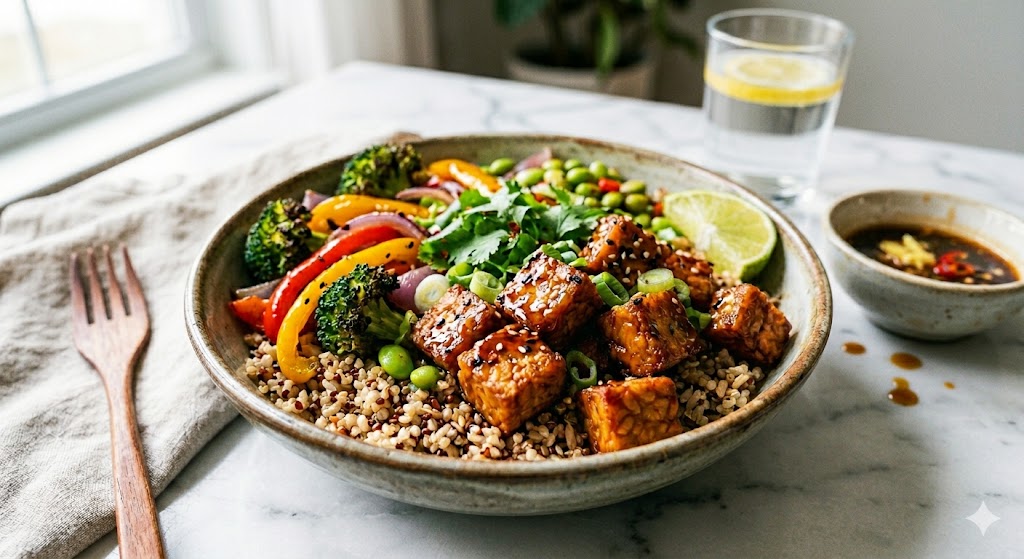
| Maintenance | 125–175 g (6.2 oz) | Rice or quinoa + vegetables + light sauce |
| Bulking | 150–200 g (7.1 oz) | Larger grain serving + tahini, nuts, or avocado |
These are examples, not prescriptions. Build your own meal in the Plate Builder and adjust portions to your calorie and protein targets.
Tempeh vs tofu
Tempeh is usually higher in calories, protein, fiber, and fat per 100 g (3.5 oz) than many tofu varieties. Tofu is often easier to fit into a very low-calorie meal; tempeh offers a denser, chewier whole-bean option. Read the full tempeh vs tofu comparison for preparation and nutrition differences.
Tempeh recipes to try
Frequently asked questions
How much protein is in 100 g (3.5 oz) of tempeh?
A USDA reference entry provides 19.9 g per 100 g (3.5 oz) cooked. Check your package because different beans and added ingredients change the value.
Is tempeh good for weight loss?
It can be. Protein and texture can make meals satisfying, but calories still matter. Measure oil and sauces and choose a portion that fits your deficit.
Can I eat tempeh without cooking it?
Follow the package instructions. Cooking improves flavor and texture and reduces food-safety uncertainty after storage and handling.