Gluten-Free Flax and Sesame Crackers
If you're vegan and don't have flaxseeds at home, drop everything and go get some.
I'm completely serious.
This is one food that deserves a permanent spot in your pantry.
Why Flaxseeds?
First, whole flaxseeds keep well for a long time in an airtight jar. They aren't spoil-proof, though, so store them somewhere cool and dark.
Second, flaxseeds contain alpha-linolenic acid (ALA), a member of the omega-3 family of healthy fats. Yes, you're fat—but you're the good kind.
The omega-3 family has two other famous siblings, DHA and EPA, found mainly in fatty fish such as mackerel, tuna, and salmon.
The nutrition estimate I'm using is 2,000 mg of omega-3s in 2 teaspoons of flaxseeds, with a daily intake range of 1.5 to 3 grams. Actual amounts depend on the serving, and that range isn't a universal recommendation for everyone.
EPA and DHA often get the spotlight in omega-3 recommendations. Flaxseeds provide ALA, which your body can convert to EPA and DHA, though that conversion is limited. They're not a one-for-one replacement.
Omega-3s have been studied for their potential role in reducing the risk of heart disease, cancer, stroke, and other conditions. The evidence varies by condition and type of omega-3, so don't think of flaxseeds as a guarantee against disease.
Flaxseeds also contain phytoestrogens—yes, plant compounds like those found in soy. Researchers have explored their possible connection with lower breast cancer risk, but that doesn't mean flaxseeds are proven to prevent it.
Does it have to be flax?
Nope. You can also find alpha-linolenic acid in chia seeds, sage seeds, canola oil, and other foods.
Oh, and to make the fats in flaxseeds easier for your body to absorb, grind the seeds.
People have asked me about heat, so let's clear that up: baking with flaxseeds isn't the same as heating flaxseed oil. The fats are more protected in the seeds, though that doesn't mean they're completely immune to oxidation under every cooking condition.
A Little About This Recipe
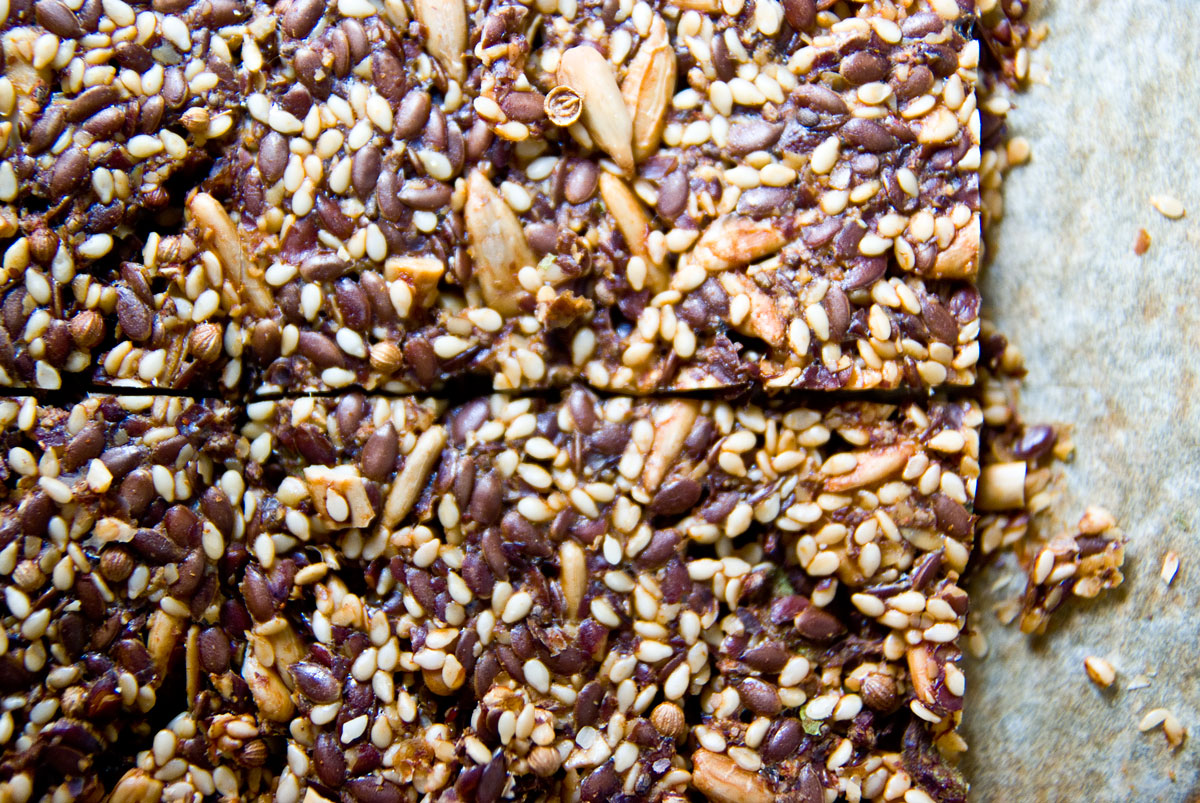
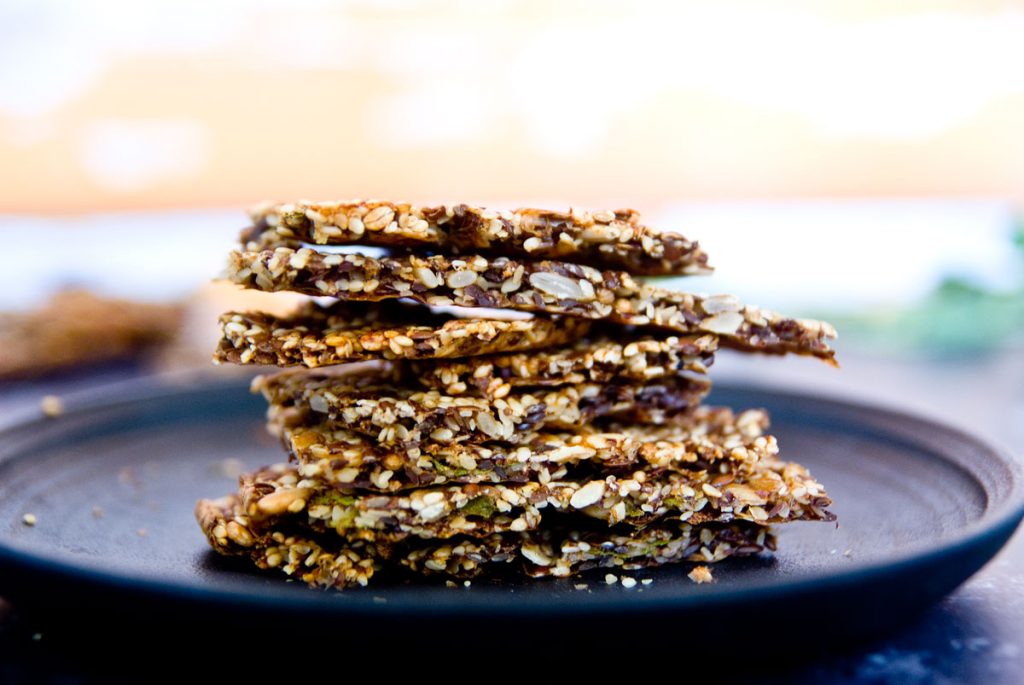
There's no flour in this recipe. The crackers hold together entirely thanks to the natural thickening power of flaxseeds.
For really crisp crackers, spread the mixture thinly across the entire baking sheet.
If the center is still damp at the end of baking, cut off the crisp edges and remove them. Return the baking sheet to the oven for another 10 minutes.
___________________________
How Do I Serve Them?
Try 4 crackers with a protein-containing spread, such as hummus or soy cheese, for an easy, low-carb breakfast.
Or have 2 crackers as a late-night snack.
___________________________
Nutrition information provided by Noam Bachar (an Israeli nutritionist and fitness coach):
Each cracker—1 of 30, weighing 11 g (0.4 oz)—contains:
50 calories
2 g carbohydrates
2 g protein
4 g fat (including 0.5 g saturated fat)
400 mg – omega-3s
1.5 g dietary fiber
Want to learn more? Come join one of my cooking workshops!
Gluten-Free Crackers
Ingredients
- 1/2 cup ground flaxseeds You can grind them in a blender. I've tried it—it works great!
- 1/2 cup flaxseeds whole
- 1/2 cup sunflower seeds or any other seeds you like
- 1/2 cup sesame seeds
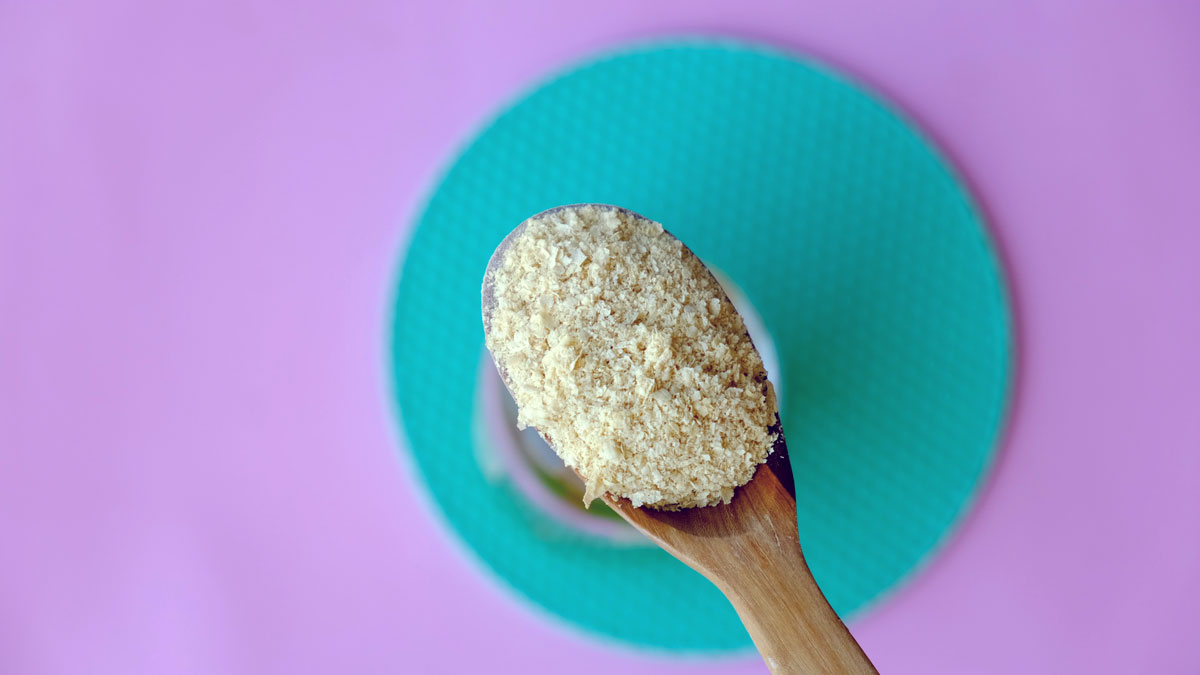
- 2 tablespoons nutritional yeast flakes optional, but they add protein and wonderful flavor
- 1/2 teaspoon dried oregano or another dried herb you like, such as rosemary or thyme
- pinch salt
- 1.5 cups water
- 1 teaspoon coriander seeds optional—but delicious
Instructions
-
Combine all the ingredients in a bowl and mix thoroughly.
-
Set aside for about 40 minutes, until the mixture thickens.
-
Preheat the oven to 170°C (340°F).
-
Spread the mixture thinly across the entire baking sheet. Don't forget to line it with parchment paper first!
-
Don't worry if the mixture seems too runny. It'll dry out as it bakes.
-
Bake for about 40 minutes.
-
After baking, let the crackers rest in the oven for another 20 minutes or so to firm up completely.
-
Only then remove the baking sheet and let the crackers cool completely.
-
Cut into crackers and store in an airtight container for up to 1 month.