Raw butternut squash provides about 45 calories, 1.0 g protein, 11.7 g carbohydrate, and 0.1 g fat per 100 g (3.5 oz). Cooked values can look different because water content changes, so compare entries with the same preparation method and weigh the food in the state you log it.
Butternut squash is a high-volume carbohydrate food rather than a protein source. It works especially well in a cutting diet because it adds color, fiber, potassium, and a generous portion for relatively few calories.
Calories in 100 g (3.5 oz) butternut squash: nutrition facts
| Nutrient | Raw, per 100 g (3.5 oz) |
|---|---|
| Calories | 45 kcal |
| Protein | 1.0 g |
| Carbohydrate | 11.7 g |
| Fat | 0.1 g |
| Fiber | 2.0 g |
These reference values come from USDA FoodData Central. Variety, maturity, trimming, and cooking can shift the result. Added oil changes the calorie count far more than roasting itself: one tablespoon of oil adds roughly 120 calories to the tray.
Raw vs cooked butternut squash calories
Cooking does not create calories, but it changes water weight. If squash loses water in the oven, 100 g (3.5 oz) of the cooked food can contain more of the original squash than 100 g (3.5 oz) raw. Boiling may retain or absorb more water. For accurate tracking:
- Use a raw database entry when you weigh it raw.
- Use a baked or boiled entry when you weigh it cooked.
- Log oil, tahini, nuts, sauces, and toppings separately.
Is butternut squash good for cutting?
Yes. A 250 g (8.8 oz) raw portion is about 113 calories before oil and toppings. Pair it with a substantial protein source—such as tofu, tempeh, TVP, seitan, or chickpeas—to improve satiety and protect lean mass during a calorie deficit.
Use the Plate Builder to add a protein anchor and adjust the rest of the meal to your target.
Is butternut squash good for bulking?
It can be, but its low energy density means very large portions may fill you up before you reach a calorie surplus. For a higher-calorie meal, combine it with rice, quinoa, chickpeas, tahini, olive oil, seeds, or nuts. The squash contributes carbohydrate and micronutrients while the other foods raise protein and energy.
Best ways to prepare butternut squash
- Air fryer: 2 cm cubes at about 190°C (375°F), tossed once or twice, until browned and tender.
- Oven: roast cubes at 200°C (400°F) or roast a whole squash until a knife slides in easily.
- Soup: cook with onion, garlic, and stock, then blend; add white beans or silken tofu for protein.
- Meal prep: roast without heavy sauce, then add measured toppings when serving.
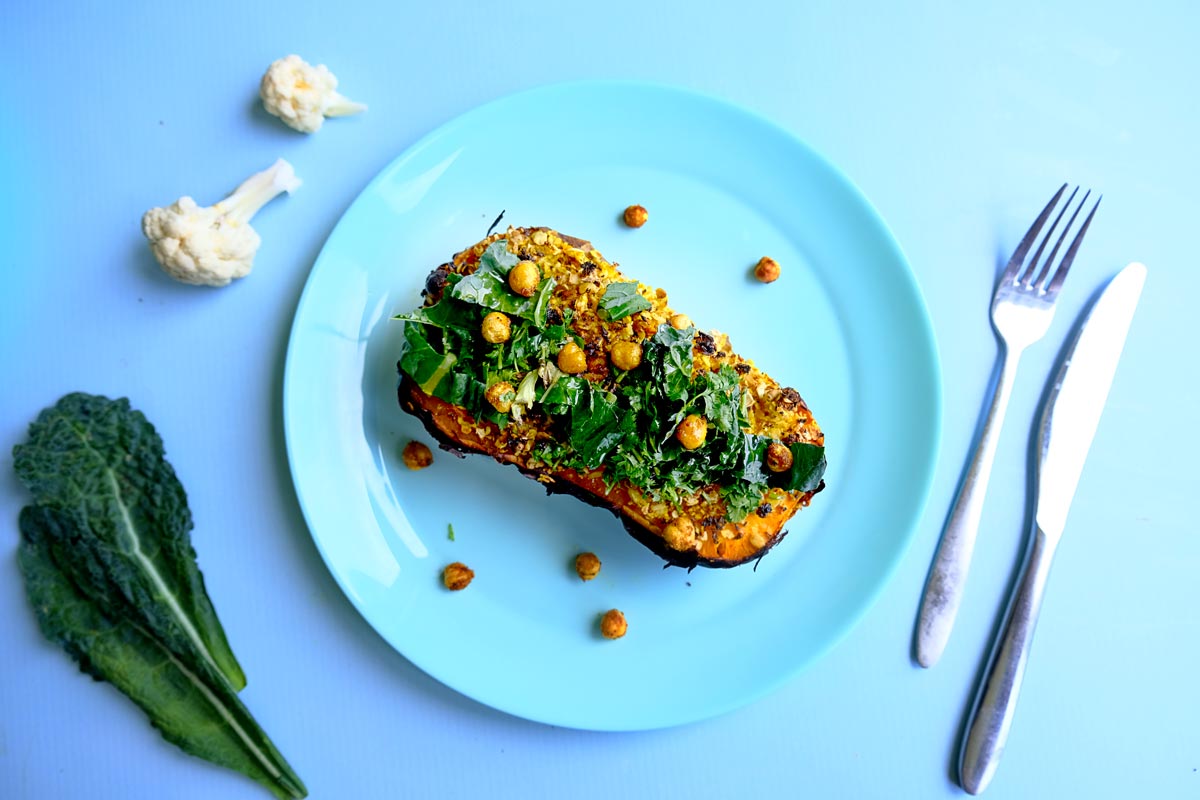
Stuffed Butternut Squash with Chickpeas and Cauliflower Crumble
This version turns squash into a complete meal by adding chickpeas and an oat-cauliflower topping. The original recipe makes two large servings.
Ingredients
- 1 medium whole butternut squash
- 200 g (7.1 oz) cooked chickpeas
- 2 tsp ground cumin, divided
- 2 tsp turmeric
- 1 tsp chili flakes
- 1 lemon
- 4 tbsp olive oil
- 2 tomatoes, grated
- 3 garlic cloves, crushed
- 50 g (1.8 oz) cauliflower florets
- 33 g quick oats
- Salt, cilantro, and chopped kale, to taste
Instructions
Heat the oven to 220°C (425°F). Roast the whole squash on a lined tray for about 60 minutes, until tender.
Mix the chickpeas with half the cumin, the turmeric, chili, salt, and 2 tablespoons of oil. Roast for about 30 minutes, until crisp.
Pulse the cauliflower into coarse crumbs. Mix with oats, remaining cumin, half the lemon juice, 1 crushed garlic clove, remaining oil, and salt.
Combine the grated tomatoes with the remaining garlic.
Halve the cooked squash and remove the seeds. Fill with tomatoes, chickpeas, and cauliflower crumble.
Return to the oven for 15 minutes, until the topping browns. Finish with herbs, kale, and the remaining lemon juice.
If you change the oil or serving size, recalculate the full dish in the Recipe Analyzer rather than relying on a generic number.
Frequently asked questions
How many calories are in 1 cup of butternut squash?
It depends on whether the cup is raw cubes, cooked pieces, or mash and how tightly it is packed. Weighing in grams and matching the preparation method gives a more reliable result.
Is butternut squash lower in calories than sweet potato?
Usually, yes, per 100 g (3.5 oz), but the exact comparison depends on cooking and water content. Both can fit a performance-focused diet.
Can you eat butternut squash skin?
The skin is edible when thoroughly cooked, although many people peel it for texture. Wash the squash well and remove damaged areas.