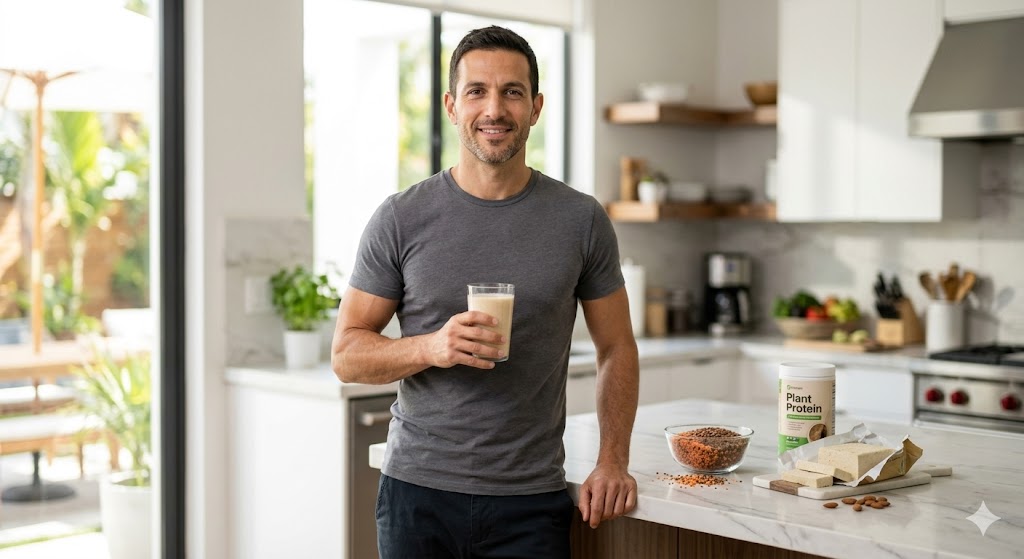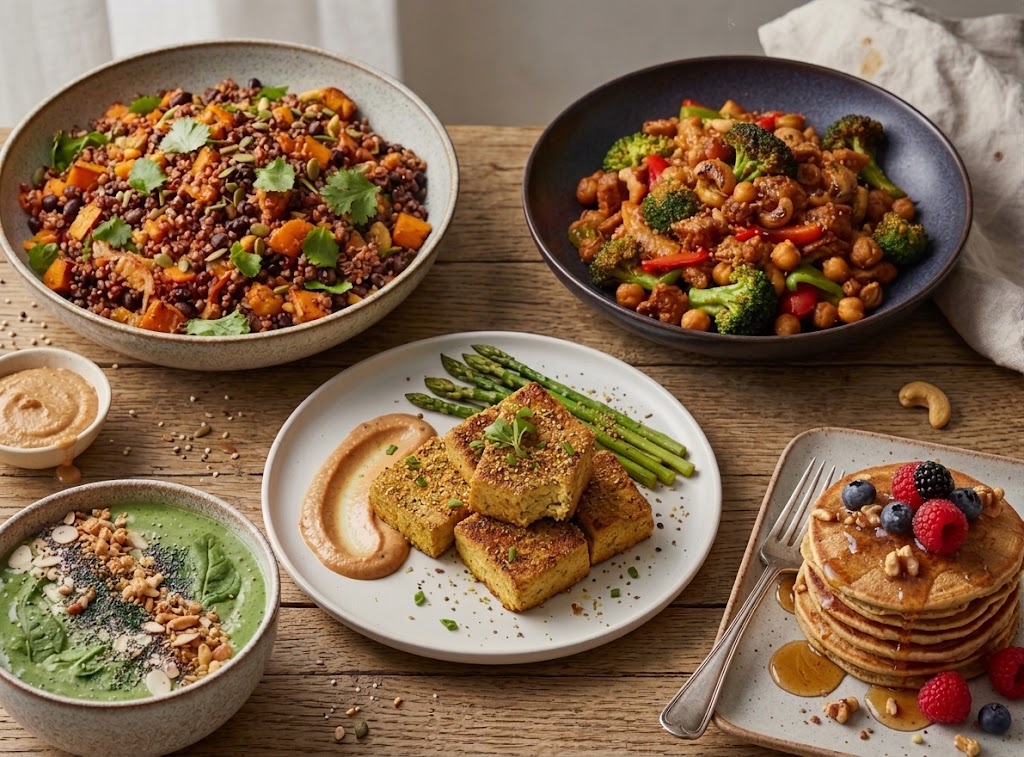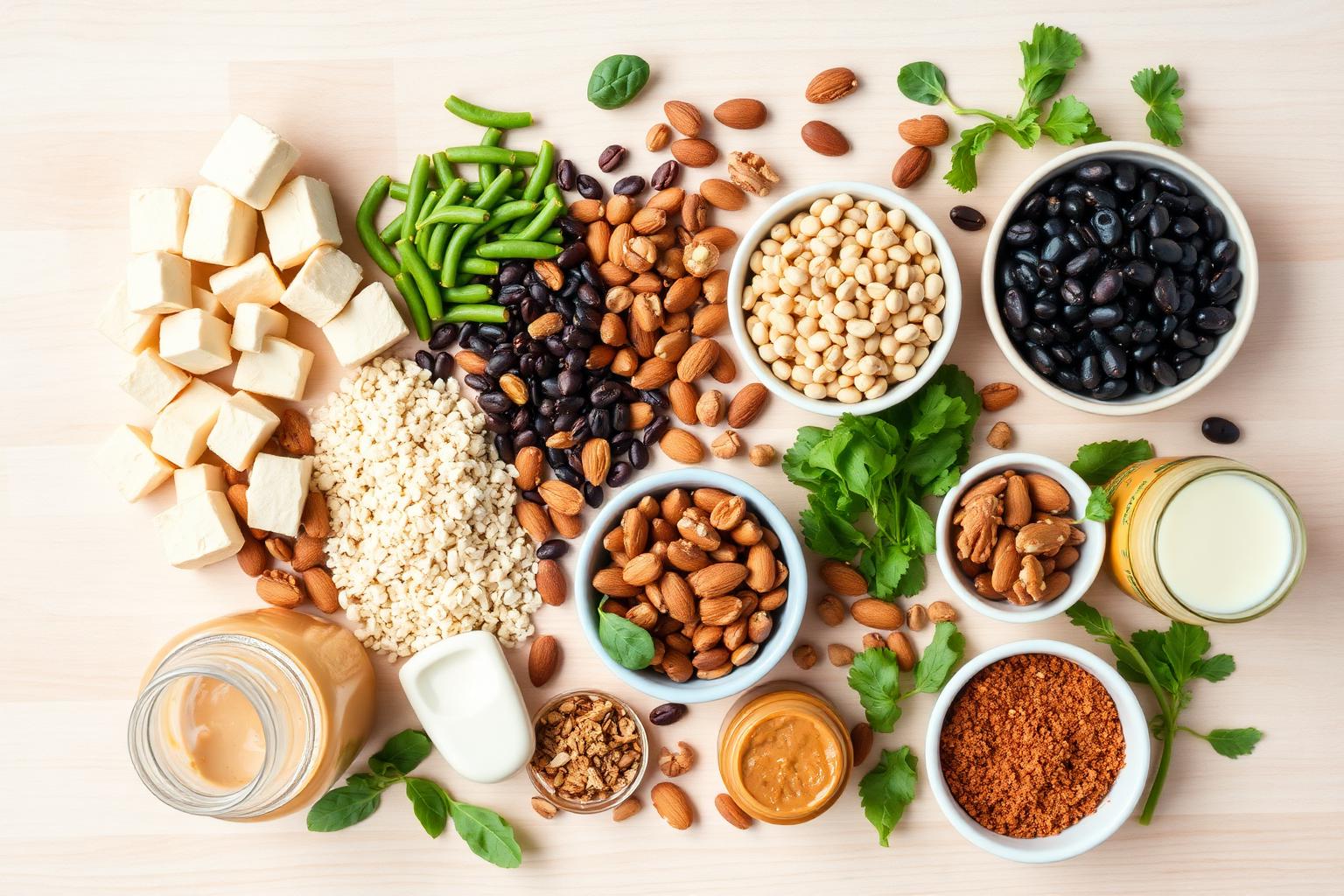
If you've made it here, you've likely realized one important thing: vegan protein powder isn't a luxury—it's a tool. In a market flooded with brands, flavors, and prices, this guide will give you a clear framework to make the right choice the first time—without wasting money on tubs that will just sit in your cupboard.
\n\nWhy do you even need vegan protein powder?
\nVegan protein powder solves a very specific problem: reaching 1.6–2.2g of protein per kg of body weight per day without having to eat 7 lentil-based meals. Even those who cook daily find that on training days, during travel, or at work—a 30-second shake saves the day and their muscle mass.
\n\nBut—and it's a big but—not all vegan powders are created equal. The differences in protein source, absorption, taste, and price can amount to hundreds of shekels a year.
\n\n3Types of Vegan Protein Powder - Which One Wins?
\n\n1. Pea Protein
\n- \n
- Amino Acid Profile: Rich in lysine and branched-chain amino acids (BCAA), but low in methionine. \n
- Absorption: Very good, comparable to whey in recent studies. \n
- Taste and Texture: Slightly "earthy," very thick—best suited for creamy shakes rather than just water. \n
- Allergens: Low—soy-free, gluten-free, dairy-free. \n
2. Brown Rice Protein
\n- \n
- Amino Acid Profile: Lacks lysine—always take it in combination with pea protein. \n
- Absorption: Relatively slow, gentle on the stomach. \n
- Taste and Texture: Thinner, less "heavy"—good for those who don't like thick shakes. \n
3. Soy Protein Isolate
\n- \n
- Amino Acid Profile: Full and complete—the only plant-based protein that competes head-to-head with whey. \n
- Absorption: Excellent, fast. \n
- The Phytoestrogen Question: Recent meta-analyses from 2021–2024 showed no effect on testosterone or estrogen levels in men with reasonable consumption (up to 50 g (1.8 oz) of soy protein per day). \n
How much protein powder should you take per day?
\nThere's no need for complicated formulas. Use this rule of thumb:
- \n
- Average Active Person: 1.4–1.6g of protein per kg per day. \n
- Muscle Building / Training 4+ times a week: 1.8–2.2g per kg. \n
- Cutting (Caloric Deficit): 2.0–2.4g per kg to preserve muscle mass. \n
Out of this total, 1–2 servings of powder per day (about 25–50 g (1.8 oz) of protein) supplement what is difficult to get from food—while keeping the rest of your diet varied and healthy.
\n\nWant to know exactly how many grams of protein you need? Use my free protein calculator and get your personalized number in 30 seconds.
\n\nWhen is the best time to drink it?
\nRecent studies (Schoenfeld et al., 2020) have shown that the 30-minute "window of opportunity" after a workout is a myth. What truly matters is protein distribution throughout the day—4 meals of ~0.4g/kg each.
\nPractical times that work:
- \n
- Morning: A shake with fruit and peanut butter—starts your day with 30g of protein. \n
- Around Training: Within a two-hour window before or after—convenient, fast, and efficient. \n
- Before Bed: A serving with oat milk—provides amino acids throughout the night. \n
How to choose a vegan protein powder - 5 Criteria
\n- \n
- Real Protein Content: Look for at least 22g of protein per 30g serving (meaning 73%+ purity). \n
- Clean Label: A short ingredients list. Save room for natural sweeteners (stevia, fruit) rather than aspartame and added sugar. \n
- Protein Source: Blended (Pea + Rice) > Pea > Soy > Rice alone. \n
- Palatable Taste: If it doesn't taste good, you won't drink it consistently. Chocolate, vanilla, and coffee are considered the "safe" flavors. \n
- Price per gram of protein: A simple calculation: Price of the tub ÷ Total grams of protein in the tub. Up to 0.25 NIS per gram is reasonable; over 0.35 NIS—there are cheaper solutions. \n
Supplements you need—and useless ones to avoid
\nWorth looking for: Vitamin B12, Iron, digestive enzymes, natural BCAAs.
\nNot actually important: "Super-powders" like spirulina (a 0.5g dosage is just marketing), vegan collagen (doesn't exist in nature—what's sold are just regular amino acids).
\n\nPopular Brand Comparison in Israel (2026)
\nThree main price categories:
\n- \n
- Budget (up to 200 NIS/kg): Products you import yourself from iHerb or Bulk—best price/protein ratio, but with shipping and customs fees. \n
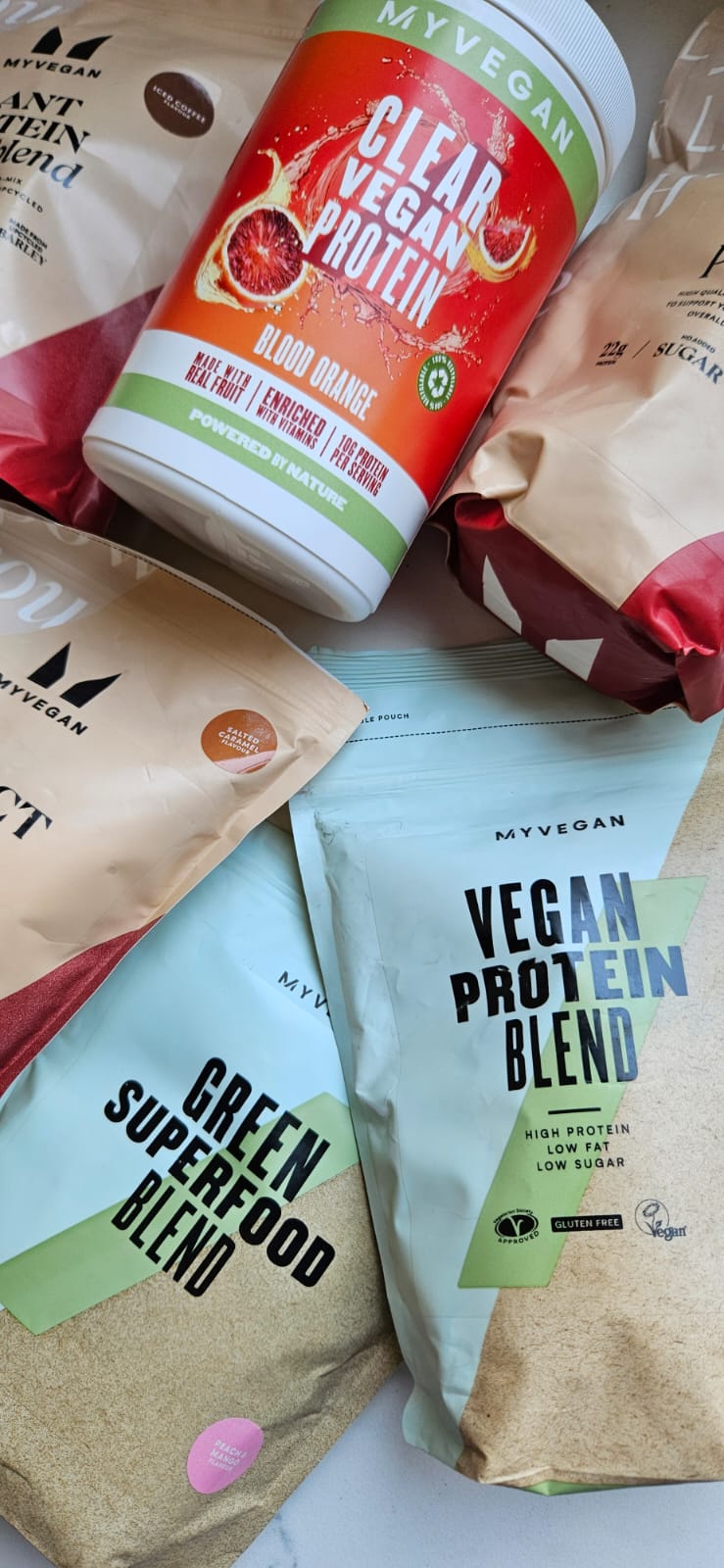
- Mid-Range (200–350 NIS/kg): Myprotein—my favorite choice for balancing price, quality, and taste. Their Vegan Blend combines pea, rice, and hemp seeds. \n
- Premium (350+ NIS/kg): American brands (Garden of Life, Vega)—strong marketing, organic ingredients, but effectively no more potent. \n
If you're starting from scratch, I would go with Myprotein Vegan Protein Blend in Chocolate flavor as a jumping-off point. The price-quality-taste ratio is the best I've found in the Israeli market.
\n\nFAQ
\n\nIs vegan protein powder less effective than whey for building muscle?
\nComparative studies (Joy et al., 2013; Babault et al., 2015) showed identical results in building muscle mass and strength, provided you consume the same daily protein total and use a blended powder with a full amino acid profile.
\n\nWhich flavor is most recommended?
\nChocolate masks the "earthiness" of pea protein best. Vanilla and Biscuit are safe second choices. Avoid "Tutti-Frutti" and cactus flavors—they are usually disappointing.
\n\nDoes it cause gas and bloating?
\nSoy and rice protein are generally "stomach-friendly." Pea protein sometimes causes gas for the first two weeks while the body adapts. If the problem persists, try a powder with digestive enzymes.
\n\nCan children drink it?
\nOver the age of 4, in reasonable amounts (10–20g per day), it is perfectly safe—it's essentially just concentrated food. However, it's best to consult a clinical pediatric dietitian.
\n\nWhat is the difference between vegan and natural protein powder?
\n"Vegan" = No animal sources. "Natural" = No synthetic additives. They aren't necessarily the same thing—some vegan powders have many additives, and some dairy powders are natural. Read the label!
\n\nSummary and Next Steps
\nChoosing a good vegan protein powder is a 10-minute process if you know what to look for: a Pea+Rice blend, 22g+ protein per serving, a price under 0.25 NIS per gram, and a taste you can live with.
\n\nThe next step? Calculate how much protein you actually need. Go to the protein calculator and start working with real numbers—not guesses.
\n